A currency-aware Next.js storefront paired with a governed admin back office. 100% client-side architecture with zero backend latency.
The storefront leverages Framer Motion to create a premium, dynamic feel. From the scroll-driven hero section to the spring-animated cart drawers, every interaction is designed to feel physical and immediate.
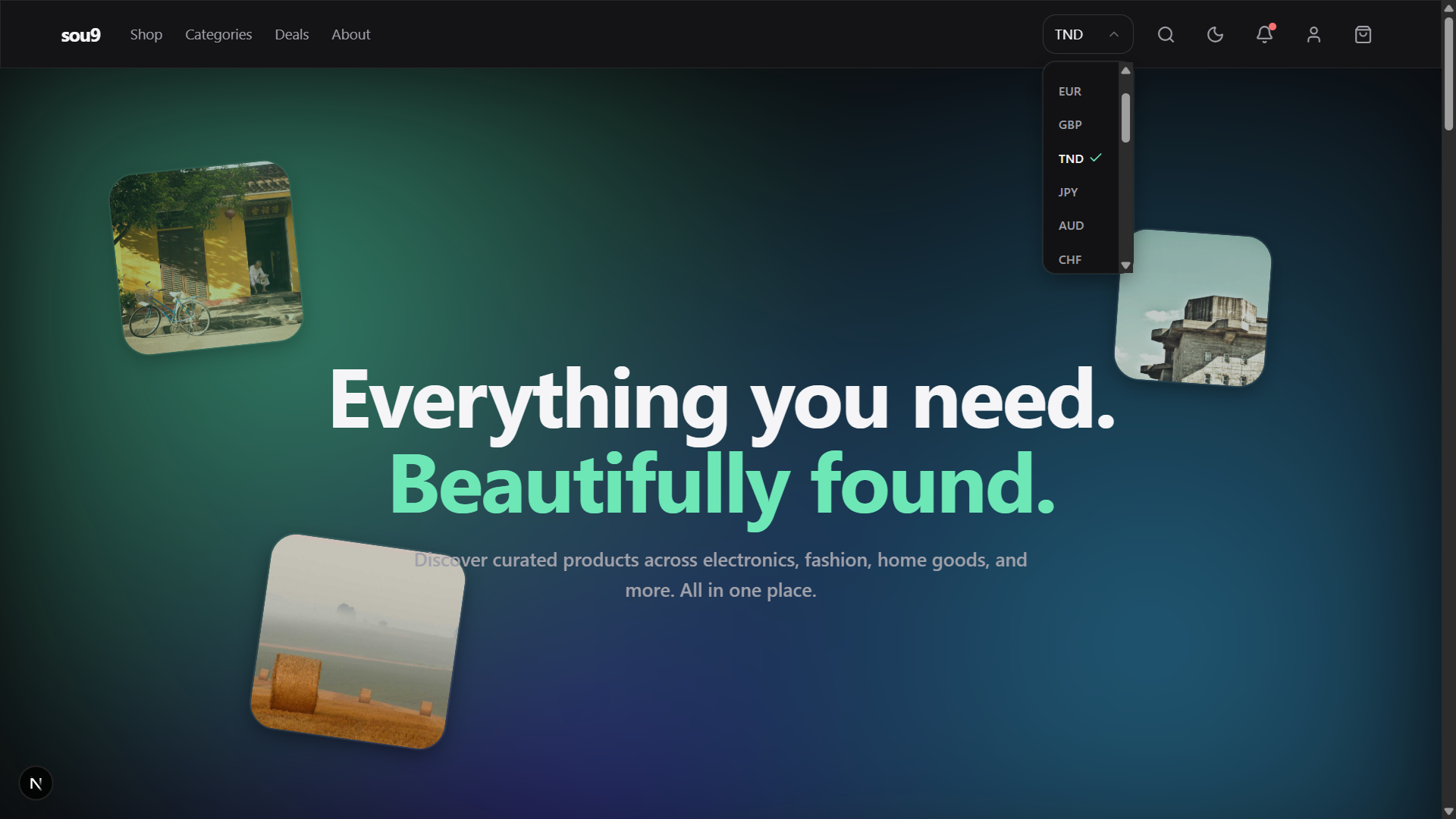
The storefront hero section with a dynamic currency selector (TND detected via timezone).
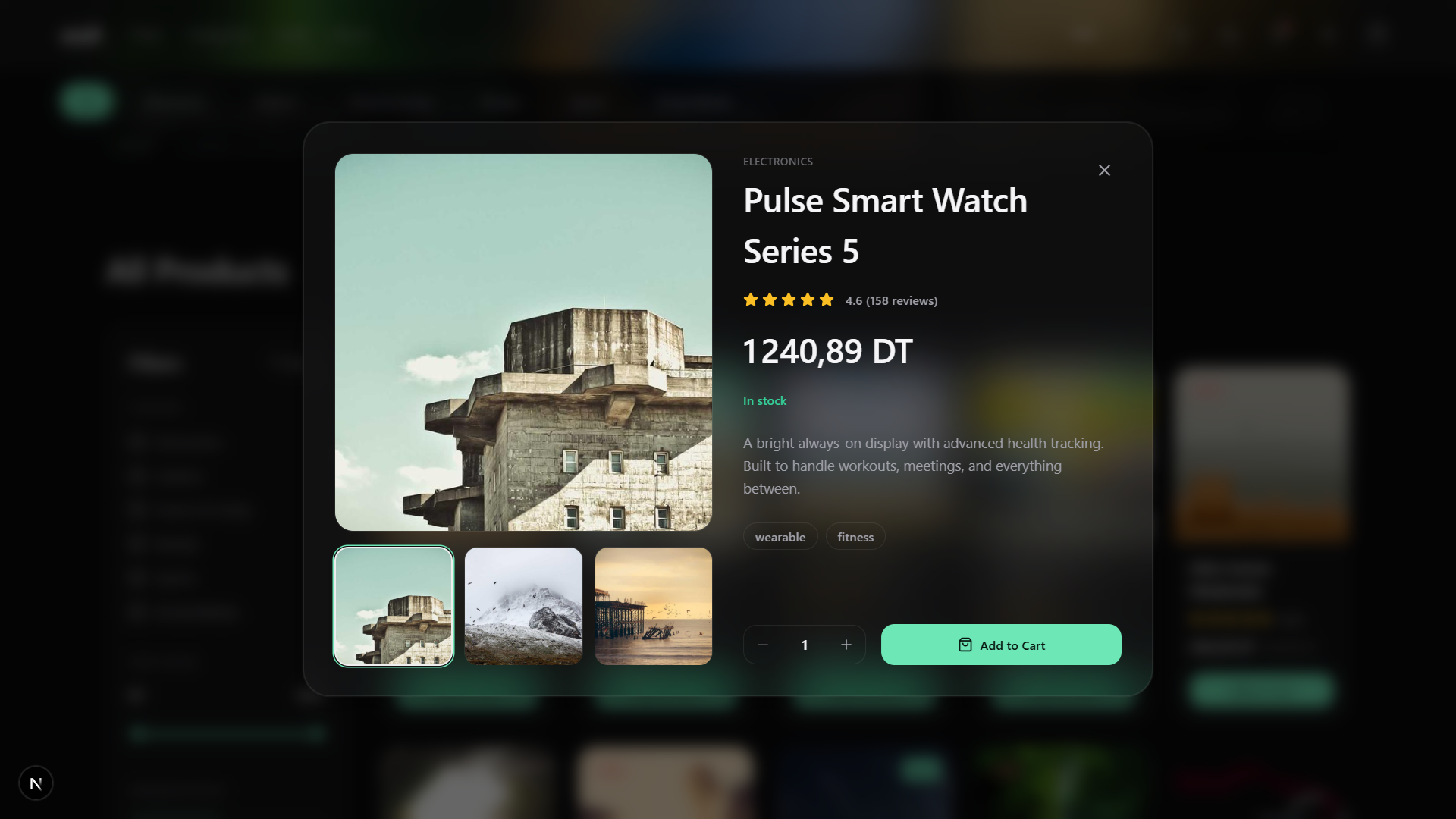
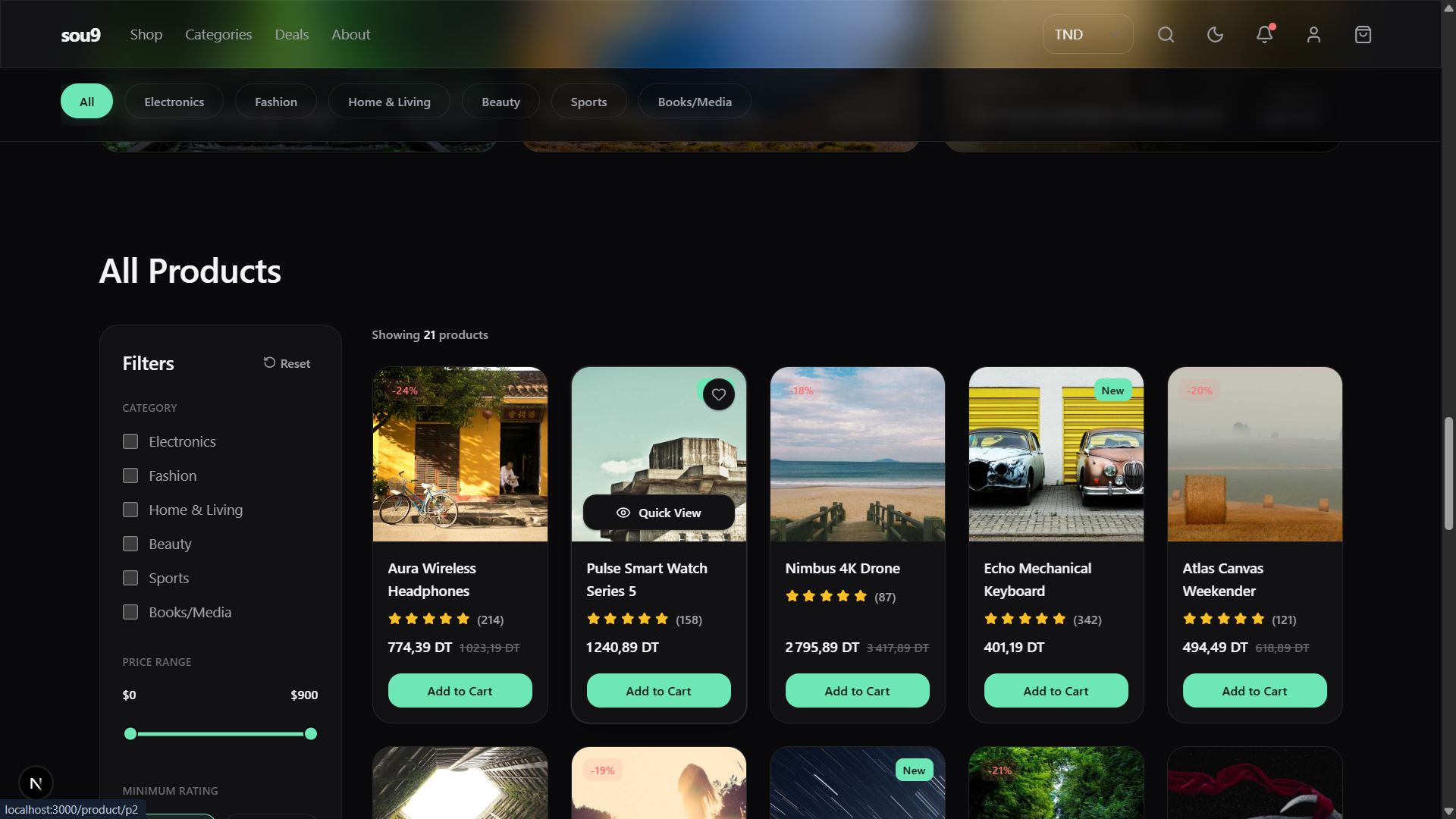
The catalog features 21 seeded products across 6 categories. The "Quick View" modal is built with a blurred glass-morphism overlay, allowing users to inspect product details and add to cart without losing their scroll position.
Even though there is no backend, the data layer is treated with enterprise-grade strictness. The domain model is fully typed, ensuring that the UI components, the Zustand stores, and the mock data all speak the exact same language.
The `Product` interface defines 14 strict fields, including optional comparative pricing (`compareAtPrice`) and boolean flags for promotion logic (`isFeatured`, `isBestSeller`).
export interface Product {
id: string;
name: string;
description: string;
price: number;
compareAtPrice?: number;
category: Category;
rating: number;
reviewCount: number;
stock: number;
images: string[];
tags: string[];
isFeatured: boolean;
isNew: boolean;
isBestSeller?: boolean;
}
Orders are typed using strict string literal unions. A status can only be `Processing`, `Shipped`, `Delivered`, or `Cancelled`. This prevents typos from breaking the UI or the analytics aggregations.
export interface Order {
id: string;
customerId: string;
date: string;
items: OrderItem[];
total: number;
status: "Processing" | "Shipped" | "Delivered" | "Cancelled";
}
export interface AnalyticsDay {
date: string;
revenue: number;
sessions: number;
}
Instead of making an expensive, latency-heavy API call to a geolocation service, Sou9 detects the user's currency client-side. It reads the browser's timezone via `Intl.DateTimeFormat()` and maps it directly to a currency code.
export function detectCurrencyCode(): string {
const options = Intl.DateTimeFormat().resolvedOptions();
// 1. Try Timezone mapping (e.g. Africa/Tunis -> TND)
if (options.timeZone && TIMEZONE_TO_CURRENCY[options.timeZone]) {
return TIMEZONE_TO_CURRENCY[options.timeZone];
}
// 2. Fallback to Locale region (e.g. fr-TN -> TN -> TND)
const region = (options.locale ?? "").split("-").pop()?.toUpperCase();
if (region && COUNTRY_TO_CURRENCY[region]) {
return COUNTRY_TO_CURRENCY[region];
}
return "USD"; // Safe fallback
}
Once the currency is detected, formatting is handled natively by `Intl.NumberFormat`. The engine is smart enough to drop decimal places for zero-decimal currencies like the Japanese Yen (JPY) or Korean Won (KRW).
export function formatCurrency(amount: number, currencyCode: string): string {
const code = EXCHANGE_RATES[currencyCode] ? currencyCode : "USD";
const locale = CURRENCY_LOCALES[code] ?? "en-US";
const zeroDecimals = code === "JPY" || code === "KRW";
return new Intl.NumberFormat(locale, {
style: "currency",
currency: code,
minimumFractionDigits: zeroDecimals ? 0 : 2,
maximumFractionDigits: zeroDecimals ? 0 : 2,
}).format(amount);
}
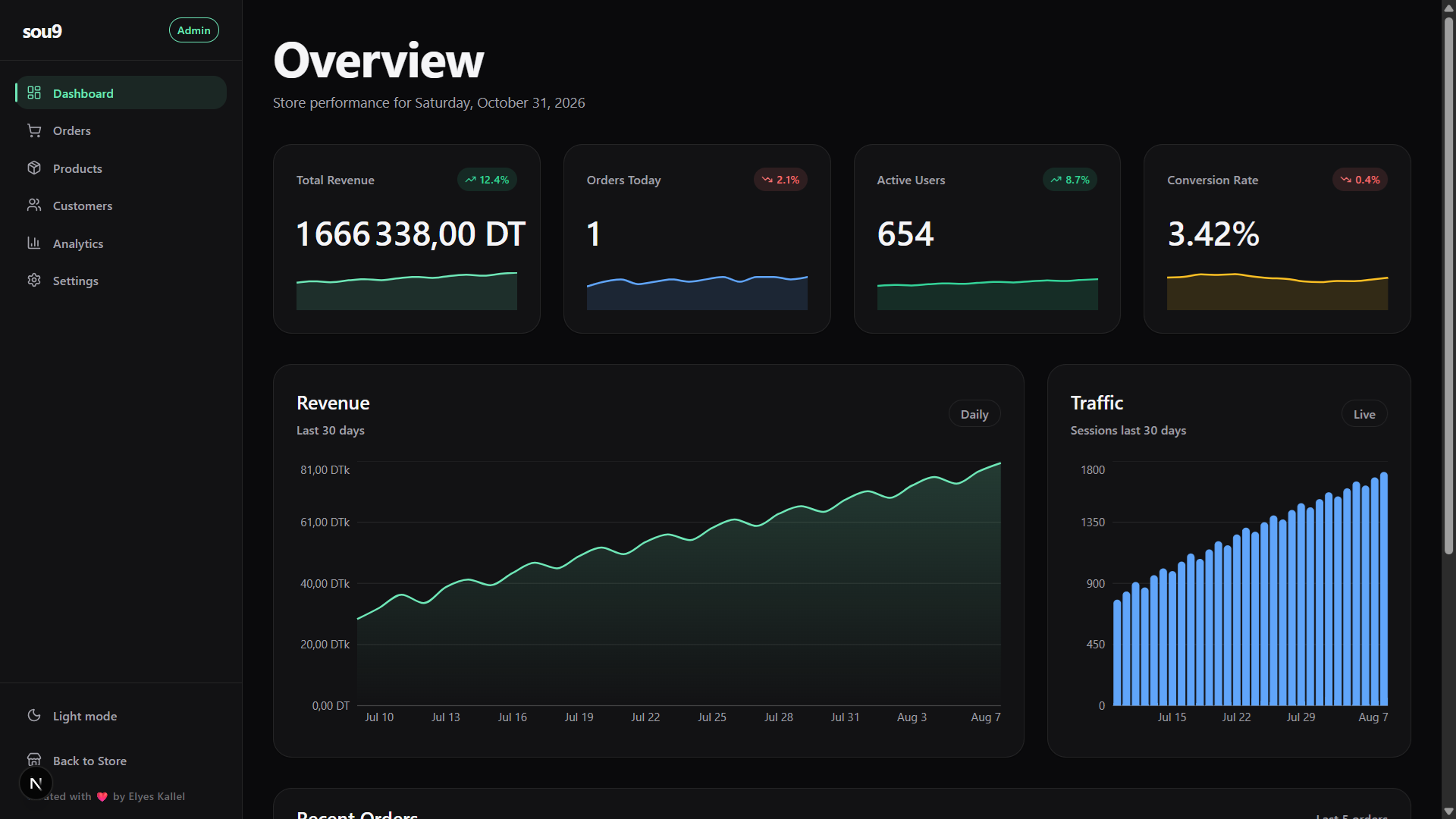
The Admin Dashboard, fully hydrated from LocalStorage.
Sou9 has no database. To simulate a persistent backend, the `adminStore` uses a custom Zustand implementation that syncs with `localStorage`.
When a merchant edits a product or changes the hero images, it is immediately written to local storage. On page load, the `hydrateSettings()` action reads that storage and overwrites the default `mockData` seed.
hydrateSettings: () => {
const storedHeroes = readStoredHeroImages();
const storedProducts = readStoredProducts();
set((state) => ({
settings: storedHeroes
? { ...state.settings, heroImages: storedHeroes }
: state.settings,
products: storedProducts ?? state.products, // Overwrite seed
}));
}
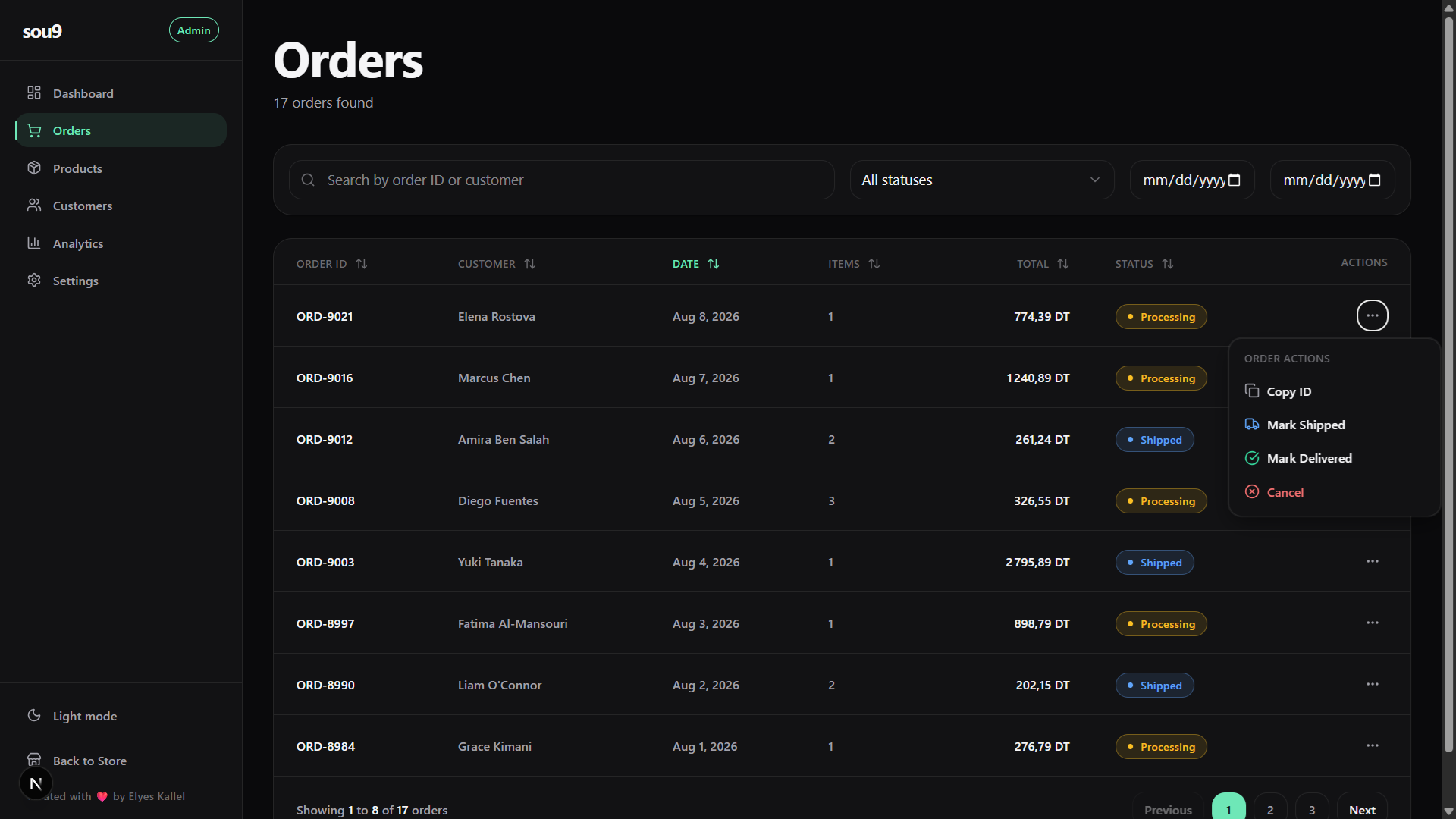
The orders table with dynamic status badges, inline actions, and search filtering.
The admin panel provides a fully-featured back office. The Orders table is equipped with sorting, searching, date filtering, and status updates (Processing, Shipped, Delivered) that instantly reflect across the app.
Because everything is client-side, these updates are instantaneous. There is no network latency, no loading spinners, and no API rate limits.
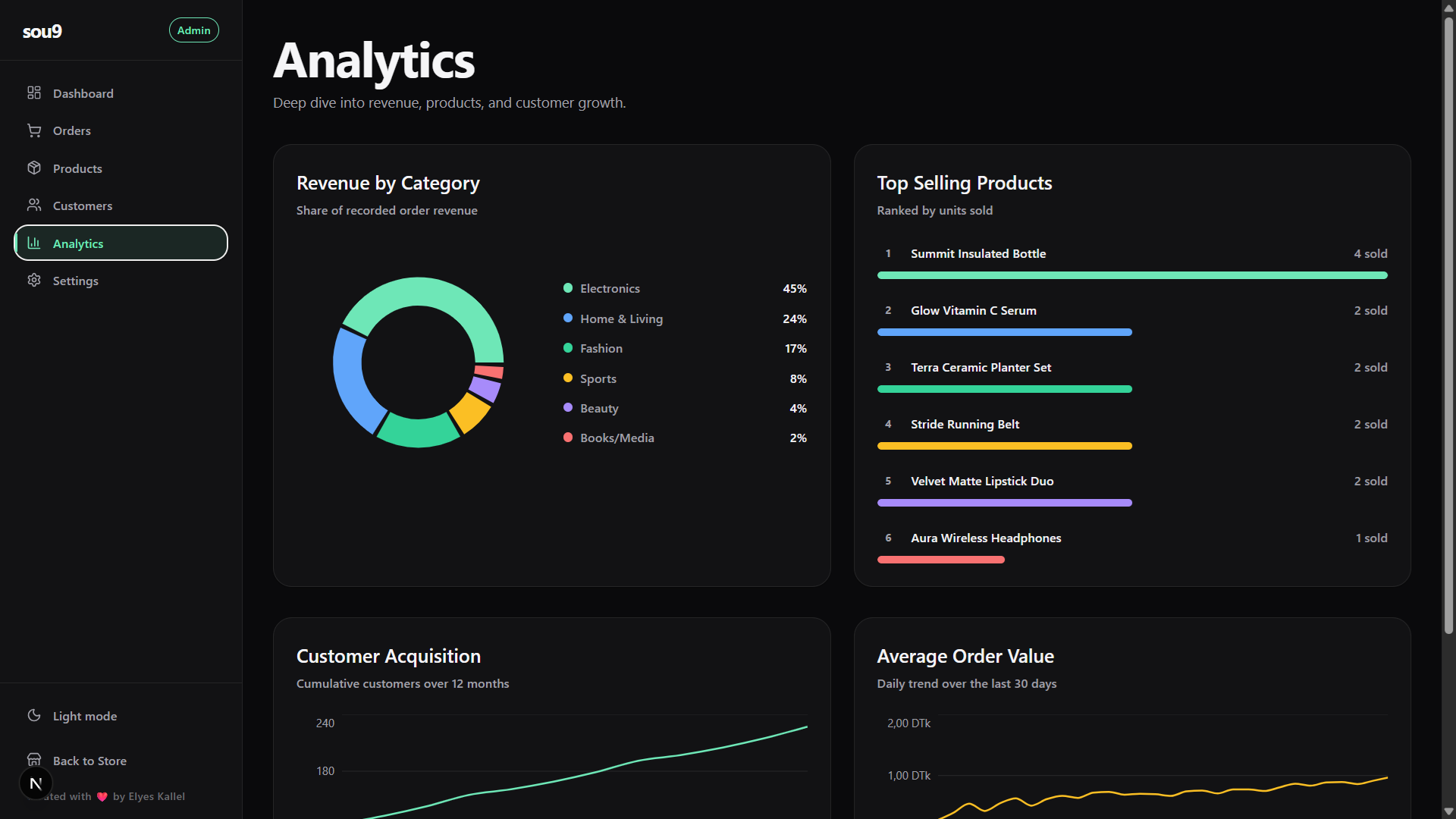
The Analytics dashboard uses Recharts to render beautiful, responsive SVG charts. It aggregates the 30 days of seeded `AnalyticsDay` data to generate revenue trends, conversion rates, and category breakdowns.
The "Revenue by Category" donut chart and "Top Selling Products" bar chart are computed dynamically from the mock order data.